


 English
 русский
 Español
Even a well‑manufactured High Suction Self‑Priming Pump can perform poorly if installed incorrectly or operated without attention to common issues.
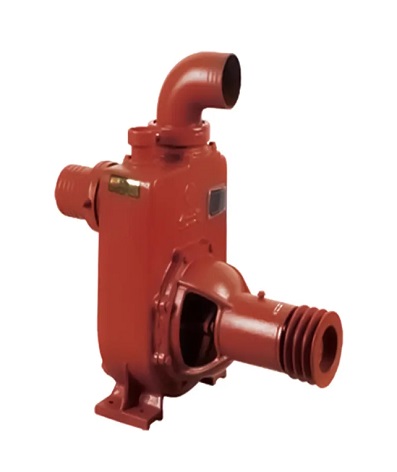
Suction Pipe Sealing and Slope
The suction pipe must be airtight. Any leak on the suction side will allow air to enter, preventing the pump from establishing a vacuum. Pipe joints should be made with gaskets, sealant, or thread tape suitable for the fluid temperature. Flanged connections are preferred for larger diameters. Additionally, the suction pipe should slope upward toward the pump inlet. A slope of one to two percent ensures that any gas bubbles that form will travel to the pump casing rather than collecting at high points. If a high point exists, an air pocket may form and block the flow. In such cases, a manual vent valve at the high point can be used during priming.
Pipe Diameter and Length
Using a suction pipe that is too small in diameter increases friction losses, which reduces the available suction lift. As a rule, the suction pipe diameter should be at least equal to the pump inlet diameter. In some installations, a larger diameter is used for long horizontal runs. The total equivalent length of the suction line (including straight pipe, elbows, valves, and fittings) should be kept as short as practical. Every additional meter of pipe and every elbow adds resistance. For a High Suction Self‑Priming Pump to achieve its rated lift, the suction line should be designed with minimal restrictions.
Initial Priming and First Start
Before the start, the pump casing must be filled with liquid. Even though the pump is self‑priming, it cannot evacuate air from the suction line if the casing itself contains only air. Most pumps have a priming port on top of the casing. The operator removes the plug, fills the casing with clean liquid until it overflows, then replaces the plug. On subsequent starts, if the suction line remains full of liquid and no air has entered, the pump may start without repriming. However, if the pump has been idle for a long time or the suction line has drained, the priming process repeats. Some installations include a foot valve at the suction pipe end to keep the line full.
Common Problem – Pump Fails to Deliver Liquid
When a High Suction Self‑Priming Pump runs, but no liquid comes out, the likely causes are: air leaks in the suction pipe, insufficient liquid in the casing, suction lift exceeding the pump’s capability, or a clogged strainer. The operator should check the casing liquid level and refill if needed. Then inspect all suction joints for leaks while the pump runs; a hissing sound or wet marks may indicate a leak. If the strainer is clogged with debris, the pump will struggle to draw water. Cleaning the strainer often resolves the issue. If the lift is too high, the only remedy is to lower the pump or raise the water source.
Common Problem – Reduced Flow or Pressure
A drop in flow rate while the pump continues to run can be caused by a worn impeller, a partially blocked suction line, or a damaged wear ring. For a High Suction Self‑Priming Pump handling abrasive liquids, the impeller clearance increases over time, allowing internal recirculation. Checking and adjusting the clearance or replacing the impeller restores performance. Another possible cause is a decrease in motor speed due to low voltage or a slipping belt (for belt‑driven units). Measuring the motor current and comparing it to the normal value can indicate whether the pump is operating on a different part of its curve.
Common Problem – Excessive Vibration and Noise
Vibration often points to cavitation, misalignment, or bearing wear. Cavitation produces a noise like gravel passing through the pump. It occurs when the suction pressure is too low relative to the liquid’s vapor pressure. Remedies include lowering the pump installation height, increasing the suction pipe diameter, or reducing the liquid temperature. Misalignment between the pump and motor can be corrected by shimming the baseplate and using a dial indicator. Bearing wear usually develops gradually; replacing the bearings and checking lubrication levels solves the problem.
Mechanical Seal Leakage
A small amount of leakage from the seal area is not normal. If fluid drips from the seal housing, the mechanical seal faces may be damaged or worn. Common causes of seal failure are dry running (running without liquid), abrasive particles, or thermal shock. A High Suction Self‑Priming Pump should never be run for more than a few seconds without liquid. Installing a dry‑run protection device that shuts down the pump when the casing temperature rises is a useful safeguard. Replacing a mechanical seal requires disassembling the pump; following the manufacturer’s instructions is important to avoid damaging the new seal.
By paying attention to suction pipe sealing, proper priming, and early detection of flow or noise changes, users can keep a High Suction Self‑Priming Pump in reliable service. Routine checks of the strainer, seal area, and bearing temperatures help prevent small issues from becoming costly repairs.

 Email:
 Phone:+86-13605899207