


 English
 русский
 Español
Smart Water Control for Modern Homes
Household Self-Priming Pump systems are becoming a practical solution for homeowners seeking reliable and automated water supply management. As residential plumbing networks grow more complex, the need for equipment that operates efficiently without constant supervision has increased. Smart control functions such as automatic on/off activation and dry-run protection are now common features in modern pump design. At the same time, engineering concepts drawn from the Sprinkler Irrigation Self-Priming Pump sector have influenced structural durability and suction performance in household models.
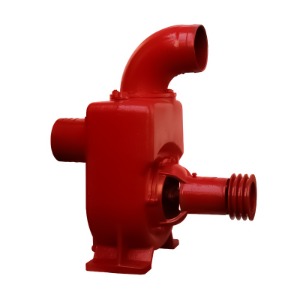
How the Automatic On/Off Function Enhances Daily Convenience
One of the defining features of a modern household pump is its ability to operate automatically. Instead of relying on manual switches, the system monitors water pressure inside the pipeline. When a faucet or appliance demands water, internal pressure drops. This change triggers the pump motor to start. Once the demand stops and pressure stabilizes, the pump shuts down smoothly.
This demand-based operation provides several advantages:
- Reduced unnecessary motor operation
- Balanced water pressure delivery
- Less manual intervention
- Improved overall system reliability
Because the pump activates only when required, it supports consistent performance across multiple household fixtures such as showers, washing machines, and kitchen taps.
Understanding Dry-Run Protection and Its Importance
Dry running occurs when a pump operates without adequate water inside the chamber. This situation may arise due to an empty storage tank, a blocked suction pipe, or an interrupted municipal supply. Without protective mechanisms, dry running can cause overheating, seal damage, and internal wear.
To address this issue, many systems integrate:
- Flow sensors that detect irregular water movement
- Thermal protection that prevents overheating
- Automatic shutdown programs
When abnormal conditions are detected, the pump stops to protect internal components. After the water supply is restored, the system can resume operation safely. This feature is particularly valuable for households using well water or rooftop storage tanks where supply levels fluctuate.
Structural Improvements Inspired by Irrigation Pumps
The Sprinkler Irrigation Self-Priming Pump category has long required durable construction due to outdoor exposure and continuous operation demands. These design principles have influenced residential pump development.
For example:
- Reinforced impeller structures improve long-term stability.
- Enhanced sealing systems reduce leakage risk.
- Stronger suction mechanisms handle intermittent water supply.
By adapting irrigation-grade engineering concepts, household pumps now offer greater resilience under varying operating conditions.
Compatibility With Multiple Residential Applications
Modern household pumps are compatible with various water supply setups, including:
- Shallow wells
- Underground storage tanks
- Rooftop water reservoirs
- Booster systems for municipal supply
The self-priming design allows the pump to remove air from the suction pipe and initiate water flow without manual priming after each shutdown. This simplifies installation and daily use.
Market Direction and User Expectations
Homeowners increasingly prioritize automation, equipment protection, and stable pressure delivery. Pumps are no longer seen as basic mechanical devices but as integrated components within a broader home water management system.
As demand for reliable and convenient water access continues to grow, smart features such as automatic activation and protective shutdown mechanisms are expected to remain central to residential pump design. By combining safety systems, consistent pressure control, and durable construction, modern pumps address the evolving needs of contemporary households.

 Email:
 Phone:+86-13605899207