


 English
 русский
 Español
Municipal wastewater collection and emergency flood response share a common need: moving large volumes of dirty, gas‑laden water from low points to discharge locations. A High Suction Self‑Priming Pump is often applied in these scenarios because it can handle entrained air, operate without continuous priming, and be installed above the liquid level.
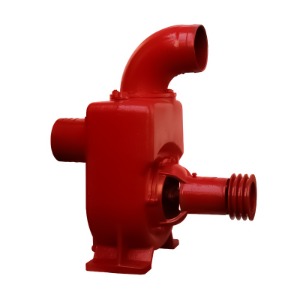
Sewage Lift Stations
In a typical sewage collection system, wastewater flows by gravity to a low‑point wet well. From there, it must be lifted to a higher elevation to continue toward a treatment plant. Submersible pumps are common, but a High Suction Self‑Priming Pump installed on the surface offers an alternative. Because the pump sits above ground, maintenance does not require confined space entry or dewatering of the well. The pump can draw wastewater from the wet well through a suction pipe. For raw sewage containing solids and fibrous materials, a non‑clog impeller design—such as a single‑vane or channel impeller—is used. These impellers allow the passage of solids of a certain size without blocking the flow. The self‑priming feature is helpful when the wet well level fluctuates; even if air enters the suction line during low water periods, the pump can re‑prime automatically once the level rises.
Flood Control and Emergency Pumping
During heavy rain events or sudden levee failures, water accumulates in underpasses, basements, and low‑lying areas. Speed of deployment is important. Mobile units equipped with a High Suction Self‑Priming Pump can be driven to the site, positioned on stable ground, and put into action quickly. The operator only needs to connect the suction hose and start the engine. Because the pump does not require a flooded suction or a foot valve, setup time is reduced compared to conventional centrifugal pumps. Floodwater often contains sand, silt, and debris; therefore, the pump should have a wear‑resistant impeller and a volute liner that can be replaced after prolonged use. Some mobile pumps are mounted on trailers with a diesel engine, fuel tank, and control panel, making them self‑contained.
Handling Entrained Air and Gases
Raw sewage and floodwater can release gases such as hydrogen sulfide and methane. A High Suction Self‑Priming Pump operates on the principle of air‑water mixing inside the pump casing. This design allows it to expel pockets of air or gas without losing prime. In a conventional centrifugal pump, a small amount of air can break the liquid seal and stop flow. The self‑priming type maintains operation even when the suction line occasionally sucks a mixture of water and air. This capability is useful in flood control when the water level drops below the strainer for a moment, or in sewage applications where gas bubbles form due to biological activity.
Installation Considerations for Dirty Water
The suction pipe for sewage or floodwater should be equipped with a strainer to prevent large debris from entering the pump. However, the strainer should not be too fine, as it may clog quickly. A free flow area several times the pipe cross‑section is typical. The pump inlet should be placed below the water surface to avoid vortex formation. Vortices can draw air into the suction line and reduce efficiency. In permanent sewage pump stations, a baffle or anti‑vortex plate can be installed in the wet well. For mobile flood pumps, the operator simply ensures the strainer is submerged sufficiently. The discharge hose or pipe should be supported to avoid kinking and should be directed away from the work area.
Maintenance After Exposure to Contaminated Water
After pumping sewage or floodwater, the High Suction Self‑Priming Pump should be flushed with clean water to remove debris and corrosive residues. The mechanical seal and bearing housing should be inspected for signs of leakage or contamination. For pumps used only in emergencies, a regular start‑up test every few months is recommended to ensure that seals remain lubricated and the priming mechanism functions. In sewage service, the pump casing may accumulate scale or grease over time; a periodic internal cleaning extends the operating life.
From municipal lift stations to rapid flood response, the High Suction Self‑Priming Pump offers a practical method for moving dirty, air‑laden water. Its ability to be installed above ground and to re‑prime automatically makes it a reliable choice for challenging water and wastewater applications.

 Email:
 Phone:+86-13605899207